
Host-Directed vs. Pathogen-Specific: Understanding a Fundamental Distinction in Antiviral Development

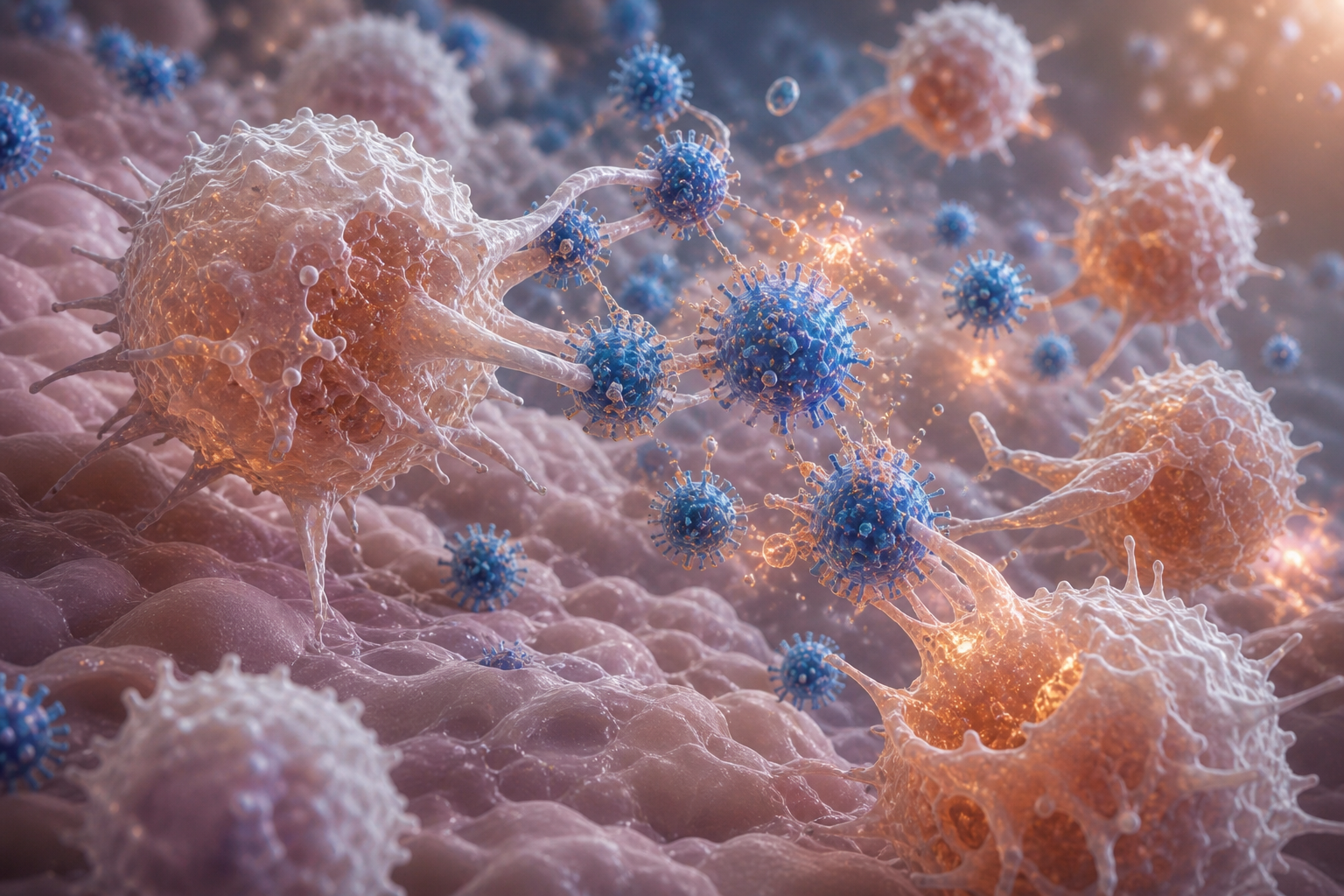
Host-Directed vs. Pathogen-Specific: Understanding a Fundamental Distinction in Antiviral Development
Two Design Philosophies
Antiviral drug development has historically followed a single logic: identify the pathogen, identify a target, design an intervention around that target. This pathogen-specific approach has produced some of the most consequential advances in modern medicine. HIV antiretrovirals. Hepatitis C treatments. Influenza vaccines. SARS-CoV-2 mRNA vaccines. The results speak to the power of precision.
The limitation of pathogen-specific design is inherent to its strength. Precision requires a known target. When that target is unknown, as in a novel pathogen, or when it shifts through viral evolution, the intervention's relevance may be reduced. Development cycles take time. During that time, the virus circulates.
What a Host-Directed Approach Does Differently
A host-directed approach does not begin with the pathogen. It begins with the host, specifically with the innate immune system, which does not require pathogen-specific identification to mount an antiviral response.
The innate immune system recognises the molecular signatures of infection and activates a broad antiviral response regardless of which specific virus is present. It is a generalist system, effective across a wide range of viral threats, and it does not need to be redesigned for each new pathogen or variant. A host-directed intervention activates or primes this response proactively, at the site of exposure, so that the immune environment is prepared when a viral threat arrives.
Complementary, Not Competing
Host-directed and pathogen-specific approaches address different phases of the infection timeline. Vaccines prepare the adaptive immune system upstream of exposure. Antivirals reduce disease severity downstream, once infection is established. A host-directed prophylactic acts at the point of first contact, in the window between initial exposure and established infection that current tools are not designed to reach.
N001, Ness Therapeutics Inc.'s lead program, is built on this principle. It is a self-administered intranasal prophylactic designed to activate innate antiviral defences at the upper airway, for prevention and early post-exposure use. Its virus-agnostic mechanism means its relevance is not contingent on a specific pathogen being identified or characterized in advance.
N001 is currently in IND/CTA-enabling development, supported by funding from the Government of Canada and in partnership with the National Research Council of Canada, advancing through formulation, preclinical studies, toxicology, and regulatory preparation toward first-in-human readiness.
To follow the program's progress or explore investment opportunities, visit www.nesstherapeuticsinc.com/contact-us.
Program and Company Updates
Sign up to receive updates on N001's development milestones, regulatory progress, and key program announcements as Ness Therapeutics Inc. advances toward clinical readiness.
